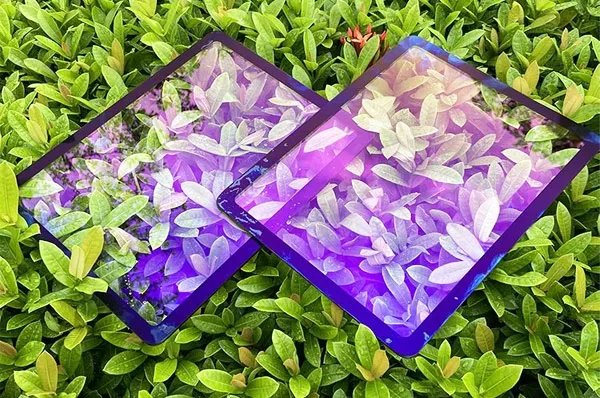
We often received quotations from customers for reflection-reducing glass. What is reflection-reducing glass? Does customer want to buy AG glass or AR glass? Actually, most customers can’t distinguish AG glass and AR glass, and don’t know how to choose the right cover glass for their products. Here, we will explain the differences between AR glass and AG glass and show some the real application cases.
What’ AR Glass? And What’s AG Glass?
Due to the popularity of electronic devices, people in modern society have higher and higher frequencies to use electronic terminal equipment. However, in the daily use of electronics products, people will be subject to glare reflection trouble, more or less. For example, when watching a computer, some scenes in the background will appear inside the computer display screen, thereby affecting the content of the display. These are caused by the reflection of ordinary glass. Such situation can be improved by reducing the reflection of glass.
Ways to Glass Reflection
In the range of visible light, the single side of ordinary glass will have 4% reflectivity, and the two sides will have 8% reflectivity. At present, there are two ways to solve the problem of glass reflection.
- AR Coating Glass: Through different optical coatings on the glass, to reduce the incident light and emitted light to reduce reflection. And this is AR glass.
- AG Coating Glass: By changing the roughness of the glass surface, the light is diffused. This is AG glass.
What’s the Difference between AR Glass and AG Glass?
AR glass, also known as anti-reflection glass, is to reduce its reflectivity by optically coating the glass on one or both sides. Through the optical coating, its transmittance can be increased to more than 99%, and its reflectivity can be controlled to less than 1%.
AG glass, also known as anti-glare/non-glare glass, is to change the roughness of the glass surface through chemical etching to produce a matte effect on the surface. When the light is reflected up, it will become a matte, through which to achieve the anti-glare effect on the surface. The lower the gloss, the better the diffusing effect of its surface, so the less glare it can produce.
Well, what kind of occasions and products AR glass and AG glass are suitable?
What’s Applications of AR Glass and AG Glass?
Anti-reflection Glass Applications
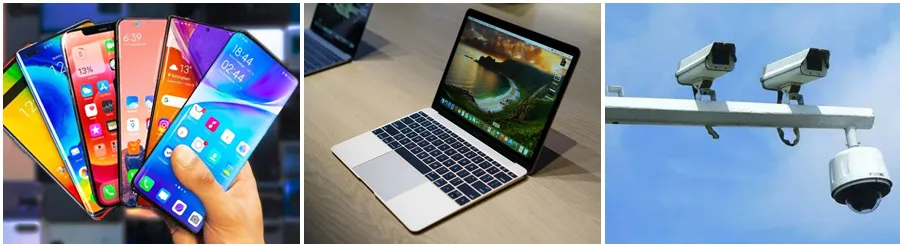
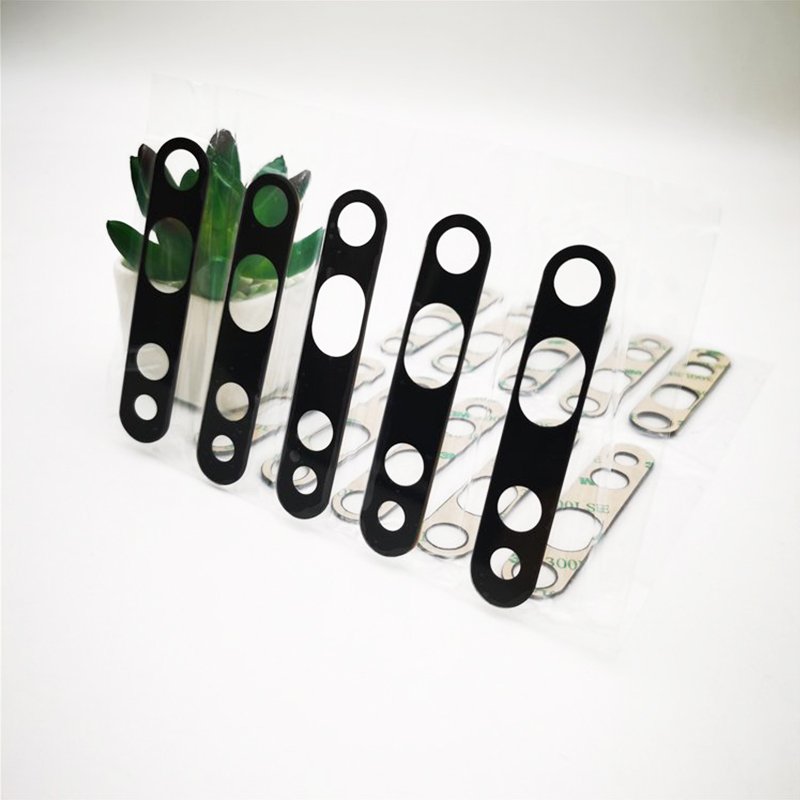
- Smart Phone: The small protective lens in front side and back side of smart phone camera should use AR coated glass.
- Laptops: As we all know, the protective cover glass of Mac is coated with AR.
- Indoor and Outdoor Monitoring Device: The protective lens of the monitoring device must also be AR coated glass.
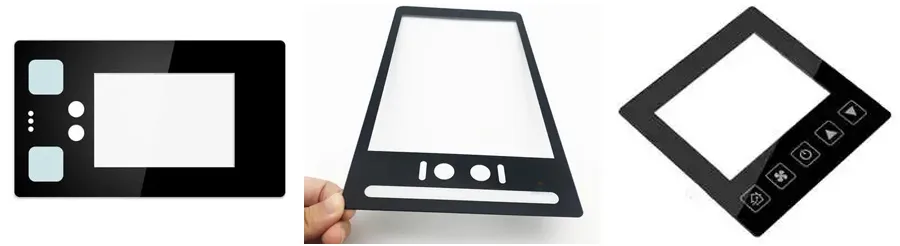
In fact, ar coating glass are widely used in different products to increase the transmittance of the display screen, or to improve the clarity of photography or imaging equipment. For example, intelligent identification devices, like fingerprint recognition, face recognition, pupil recognition, are all equipped with AR coating glasses. With the development of technology, the application of ar glass will also be more and more extensive.
Anti-glare Glass Applications
The applications of ag glass are mainly in aspects: one is for a visual environment for clear eye protection; the other is for a safe and reliable operating environment.
- Clear Eye Protection:
Devices or products that are designed to provide consumers a clearer visual environment when looking at the screen.
To provide consumers a clearer visual environment when looking at the screen, display screen of many commercial devices or electronics products will be equipped with AG glass, such as ATM machine, automatic cash register, displays in tramcar or trolleybus, announcement or intelligence display in the station, fuel dispenser in petrol station and more.
- Safe and Reliable Operation:
The operating equipment of many industries needs to be carried out outdoors or in a special environment, such as aerospace and navigation equipment, military equipment, large special equipment, etc., the operating environment of these equipment is harsh, full of strong light, exposure, rain, wind sand, salt, acid and so on. At this time, the content displayed on the instrument dashboard must be very clear, and a slight display error will cause a security accident. Therefore, more and more such equipment (such as excavators, forestry machines, etc.) need to be equipped with anti-glare glass covers on the display instrument, to provide the operator with a safer and more reliable operating environment.
How to Choose Right Cover Glass: AR Glass or AG Glass?
If there are doubts on to choose ar glass or ag glass panel for your product? Then, you can also make judgments based on common indicators.
-
Transmittance
If transmittance requirement of glass cover plate in end products is more than 93%, it basically needs AR coating. The transmittance of float AG glass is generally 88% to 91%, and the transmittance of gorilla glass can almost reach about 93% after etching AG coating. Glass coated with AR, the maximum transmittance can reach 98.5~99%.
-
Tempering Process
For AR glass, the glass is coated after tempering process, basically do the surface treatment on the final finished glass. While AG glass is surface treated on the original glass sheet with AG coatting, the shape is processed and then chemically tempered and thermal tempered, and the finish the silkscreen printing.
-
Size
AG glass and AR glass are limited by the processing size, which will affect the quality and cost of glass cover. At present, the size range of AG glass cover can be processed is larger at the same cost. And, the processing technology of ar glass with the best quality and durability is mainly vacuum sputtering, and the size of AR glass cover plate cannot be too large due to this processing technology. However, for the small size glass cover plate needed for camera lens protection, AR glass is the BEST choice from cost-effectiveness.
-
Operating Environment
If the end product is used in an environment with strong light or direct light, such as outdoors, we highly recommend AG glass, because AG processing makes the reflective surface of the glass into a matte diffuse reflective surface, which can blur the reflection effect, prevent glare and reduce the reflection light. In addition, in some special environments, such as hospitals, food processing, chemical plants, military, navigation and other fields, the glass cover must not have surface peeling phenomenon, AG glass is guaranteed to never come off because it is etched to about 0.05mm of the glass depth. However, AR glass, although the coating technology is developing repidly, is after all forming a new substance on the surface of the glass, so there is still the potential for peeling.
AG glass or AR glass? Which one should choose? In fact, this can’t be answered just based on a single indicator. The selection of ag or ar glass should be determined by the product’s market position and target group. Some also choose to use AG glass + AR coating combination to achieve the product function, such as automotive center control touch screen or display devices. Overall, both AG glass and AR glass have a cost increase of at least 50% over the cost of a piece of original glass because the glass itself is more difficult to process and because of the industry’s processing technology, among other reasons. Therefore, choosing AG glass or AR glass still depends on the needs of the product itself.


 EN
 FR
 DE
 ES
 PT
 IT
 NL
 DA
 RU
 AR
 TR
 JA
 KO
 ID
 UK
 TH
 VI
 PL
 MS
 ET
 EL