What’s Vehicle Display?
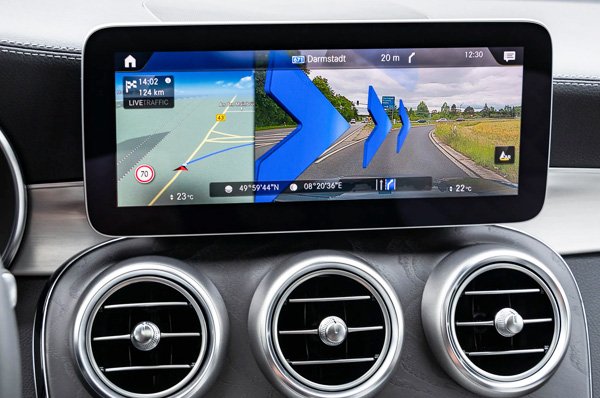
With the rapid development of economy and the improvement of people’s living standards, cars have become a standard feature in many families around the world, which has led to a continuous change in the demand for cars and its related equipment. In-car displays, as one of these devices, have emerged with the advancement of technology.
Car Screen Displays Classification
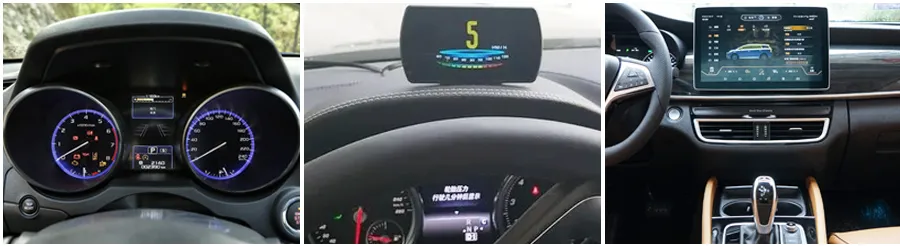
Currently, car display screens can be mainly divided into four categories: Instrument Cluster Displays, Head-Up Displays, Central Control Displays, and Rear Seat Entertainment Displays. The first three are pre-installed car displays, while the fourth is an aftermarket car display.
Trend Towards More Visible Design in Car Displays
As the application scenarios of in-car displays increase, car displays design requirements are increasingly moving towards designs that are easy to view. So, car displays integrate features of larger sizes, non-rectangular or curved shapes, higher resolutions and more. Currently, displays in light vehicles mainly consist of Instrument Cluster Displays (ICD) and Central Control Displays (CSD). In the future, the types of car displays will increase to at least six, showing trends of multi-screen, large-screen, and diversification.
Evolution of Car Display Protective Materials
A few years ago, the protective materials for car display screens were mainly acrylic (organic glass). Since 2017, there has been a rapid shift towards glass. With the development of intelligent driving technology, car displays and their corresponding glass panels have encountered unprecedented market opportunities.
Cover Glass in Vehicle Displays
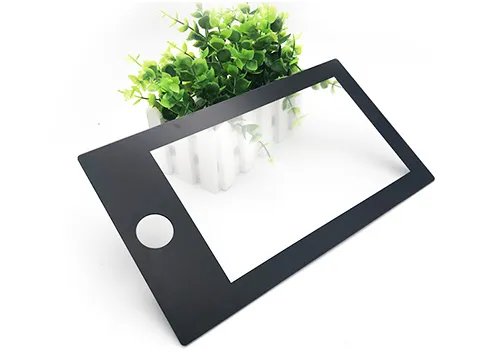
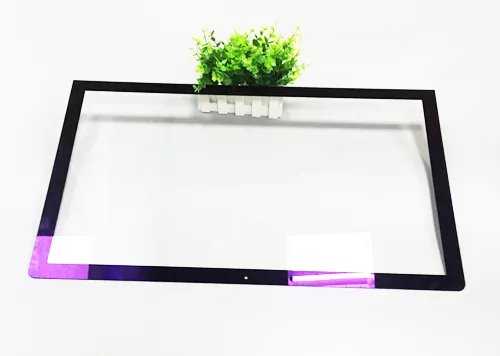
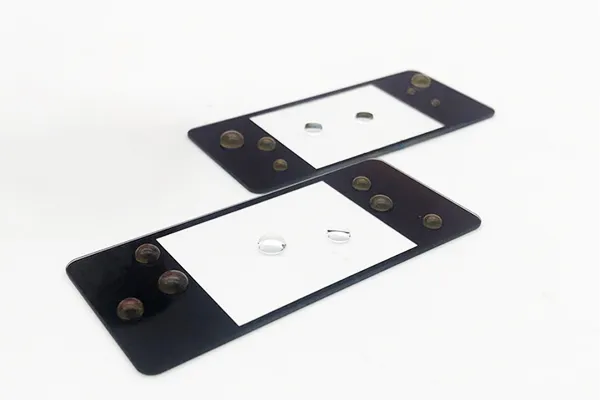
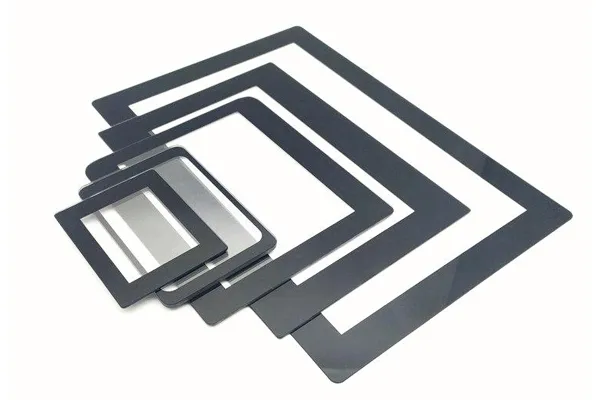
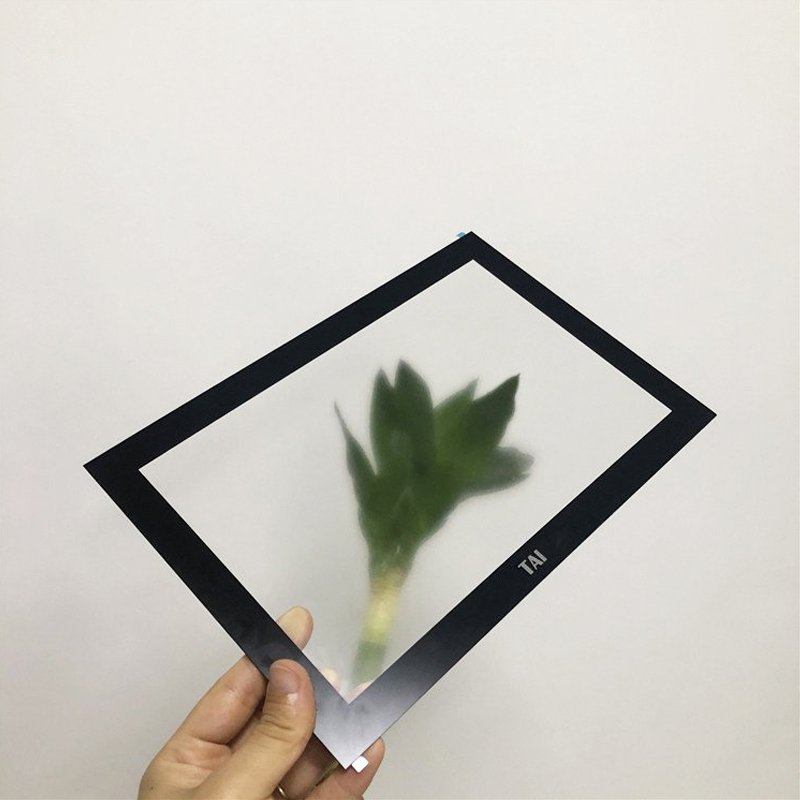
Cover glass, also known as protective glass, is used in the field of vehicle displays for its anti-drop, scratch-resistant, and high-temperature resistant properties. Its raw material is original glass, mainly Soda Lime Glass and Aluminosilicate Glass. The original glass undergoes processing at glass cover processing factory, touchscreen factory, and end-brand factory. After undergoing various tests, it eventually reaches the process of mass production. Vehicle cover glass is a highly customized product with significant technical challenges, high research costs, and requires a multidisciplinary technical integration for its application.

Cover Glass Production Techniques Classification
In-car display cover glass production technique is primarily divided into two based on the manufacturing process: Overflow Method and Float Glass Method.
Overflow Method
In this method, molten glass enters the overflow channel from the feeding section, flows down the surface of the long overflow trough and converges at the bottom end of the wedge-shaped body below the trough to form a glass ribbon. After annealing, it becomes flat glass. This method is currently a focal technology in the manufacturing of ultra-thin cover glass.
Float Glass Method
After molten glass comes out of the furnace, it flows into a molten metal float bath. Inside the bath, the glass floats on the metal liquid surface, spreading out freely due to surface tension and gravity. By the time it reaches the end of the bath, it’s cooled to a certain temperature. After exiting the float bath, the glass enters an annealing lehr for further cooling and cutting.
Cover glass after above process will undergoe additional production processes, such as cutting, fine carving, grinding, silk-screening, coating, and cleaning to meet various functional requirements. (Read more: Display Glass Cover Production Process >>)
Comparison Between Overflow and Float Techniques
| Criteria | Overflow Method | Float Method |
| Processing Steps | No need for secondary processing | Requires secondary processing |
| Overall Performance | Good overall glass performance | Good surface flatness and strong optical performance |
| Product Flatness | High flatness | Good surface flatness |
| Processing Yield | High processing yield due to better quality | Yield is somewhat lower compared to the overflow method due to the need for secondary processing |
| Quality | Better quality | Good, but requires secondary treatment |
| Technical Barriers | High technical barriers, greater difficulty, and higher cost. | Larger production capacity, lower cost, and capability to produce large-size glasses. |
| Cost | Higher cost due to the technology and process involved | Lower cost due to large production capacity |
Cover Glass Application in Automotive Industry
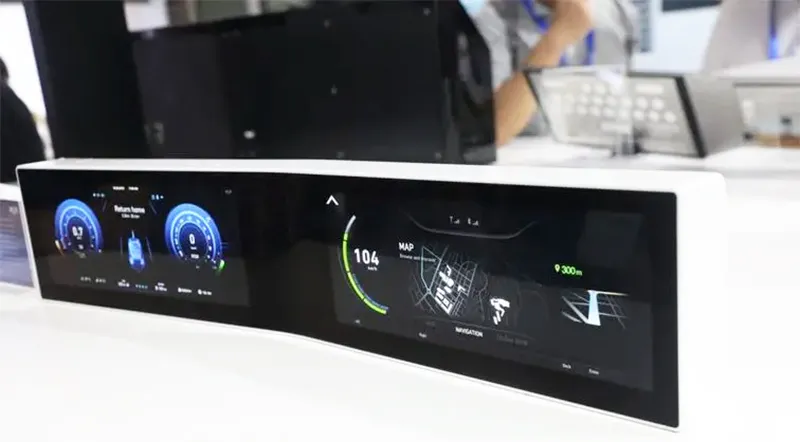
Beyond the production process of cover glass, what people are more concerned about is its application in the automotive field. The market is currently dominated by 2D cover glass. However, with the influence of automotive connectivity and digitization, display module manufacturers will keep pace with the times and trends. 3D cover glass is a significant breakthrough, breaking away from the monotonous form of traditional glass, incorporating curved designs, and greatly enhancing the design sense of car interiors.
3D Glass Hot Bending Process
During glass processing, glass is placed between the arc molds of hot bending machine. It is heated in sequence, causing glass to soften. Pressure is then applied to gradually make glass adhere to the mold. Subsequent processes include UV transfer, PVD, silk-screening, and other post-processing steps. Finally, glass is cooled gradually through a controlled cooling process. The entire hot bending process is characterized by process stability, high energy efficiency, and a high yield rate. This technique is the earliest and most mature process for 3D glass cover panel.

3D Glass Cold Bending Process
The cold bending process eliminates the need for traditional high-temperature bending and shaping. It achieves cold bending adhesion through processes like material cutting and coating. The biggest advantage of this process is the reduction of a series of processing steps, resulting in a shorter molding cycle. 3D glass cover is a major trend in future vehicle displays and is a direction in which major manufacturers are competing.
TFT Cover Glass has rich experiences in production various glass covers for screen displays designed in various industries. If you are interested in knowing more about car display cover glass, just contact us directly!



 EN
 FR
 DE
 ES
 PT
 IT
 NL
 DA
 RU
 AR
 TR
 JA
 KO
 ID
 UK
 TH
 VI
 PL
 MS
 ET
 EL