Silkscreen Printing on Glass
Silkscreen printing technology plays an important role in various fields by virtue of its adaptability, colorfulness, long-lasting effect and other advantages. In glass processing industry, from traditional glass to the emerging
display cover glass and
touch screen glass, screen printing technology runs through the entire glass industry and plays a pivotal role in it.
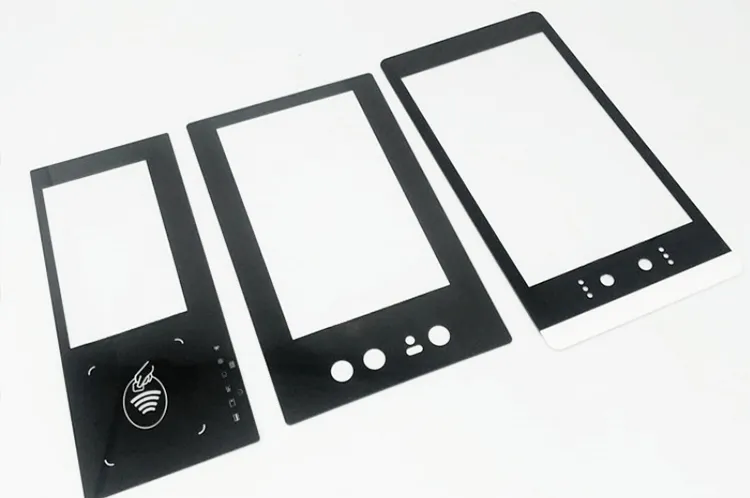
As one of the most important areas in screen printing industry, what is the silkscreen printing on glass? What are the advantages and difficulties of screen printing for cover glass or cover lens?
What’s Silkscreen Printing on Glass?
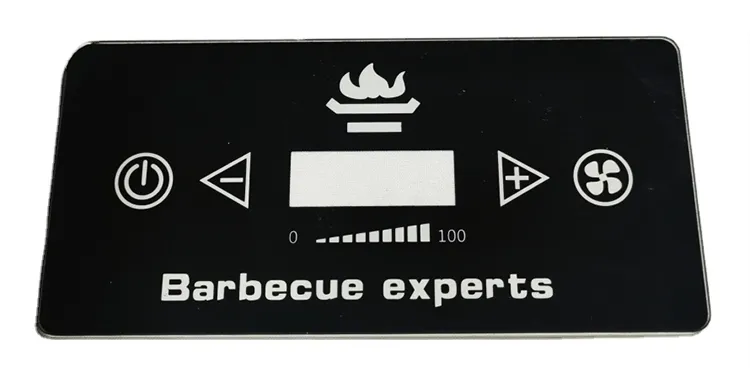
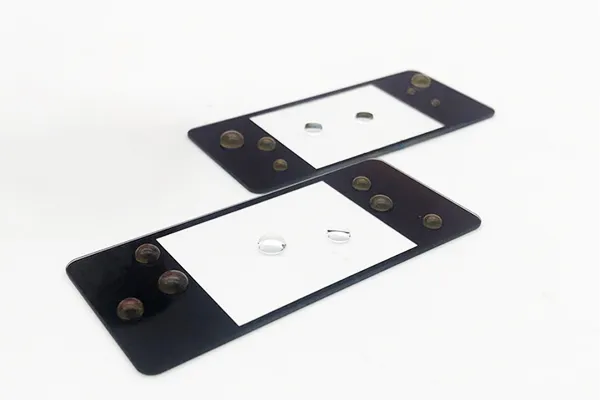
Silkscreen printing on glass is to make decoration printing on glass products by utilizing silkscreen printing plate and vitreous enamel. Vitreous enamel, also known as inks, is a printing material of glass processing. It is a paste printing material mixed and stirred by the coloring material and linking material. The coloring material consists of inorganic pigment and low melting point flux (lead glass powder); The linking material is commonly known as lubricant in the glass screen printing industry.

After printing, glass products should be put in the fireplace and fired at a temperature of 520~600℃. In this way the glaze printed onto the glass surface can be solidified on the glass to form colorful decorative patterns. If silkscreen printing is used in combination with other
glass processing technology, the printing effect will be more ideal. For example, the use of polishing, engraving, etching and other methods before or after printing on the glass surface processing can increase the printing effect doubly.
What are the Applications of Silkscreen Printing on Glass?
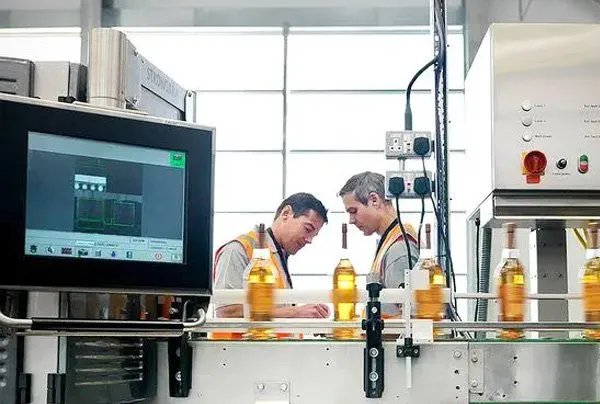
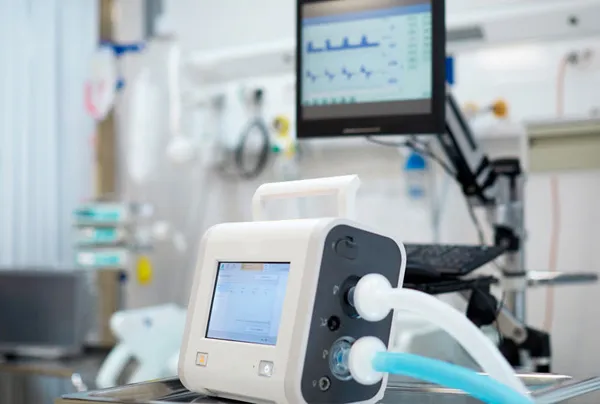
Screen printing technology is widely used in various applications, including architecture, daily necessities, electronics and electrical appliances, medical, industrial control, and other industries.
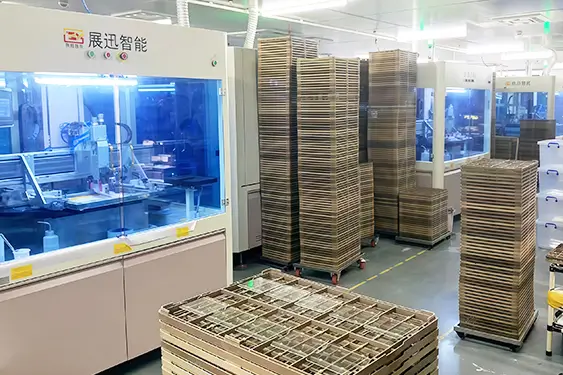
As a
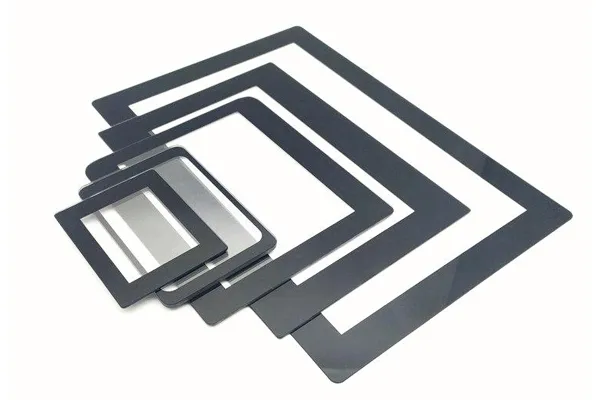
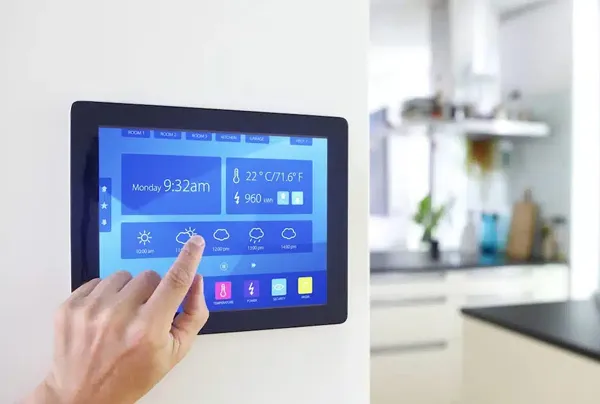
professional cover glass panel manufacturer, we provide high quality customized silkscreen printed cover glass for display panels or touchscreen panels in
different industry to meet specific requirements, including industrial control equipment, medical devices, new energy charging pile, smart home appliances, and more.
If you are interested in, just contact us to get samples for your projects or send us your drawings for customized solutions! Inks for Silkscreen Printing on Cover Glass
The most widely used inks for silkscreen printing on glass surfaces are UV inks and water-based inks.
The curing of UV inks is determined by the level of UV energy. Black and blue inks are slower to dry and require higher UV energy; Yellow, red and transparent inks are easier to cure and require lower UV energy. In order to guarantee the full curing of dark ink and light ink from over-curing, the
principle of printing should be followed: dark color inks are printed first, while light color inks are printed later.
Water-based ink is a non-toxic, odorless ink that meets EU environmental standards. The difference between oil-based ink and water-based ink is that water-based ink is more convenient to wash the screen, just use water to wash directly. While, the oil-based glass needs professional screen washing water.
Problems and Solutions of Silkscreen Printing on Cover Glass
As far as silkscreen printing technology of
cover glass for displays or touchscreens, what are the quality problems during the glass processing and what’s the solutions for these printing problems?
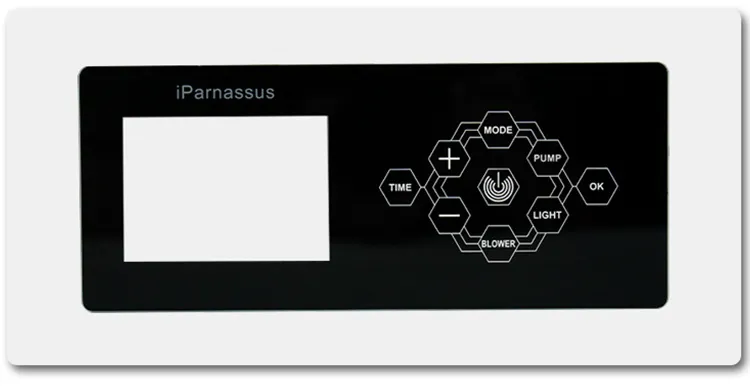
Screen Blocking
Screen blocking, also known as image blinding, is the silkscreen printing plate graphic through-hole part of the printing cannot transfer the ink to the substrate. Such phenomenon will affect the quality of printing on cover glass. And in serious cases, it will be even unable to carry out normal printing.
The reasons for the silkscreen printing process of plate blocking are intricate and complex. Causes of screen blocking can be analyzed from the following aspects:
The surface of the cover glass panel is not clean and there are also watermarks, paper prints, oil marks, fingerprints, dust particles and other dirt. These impurities cause screen blocking.
- Workshop Temperature and Humidity, and Ink Properties
Silkscreen printing workshop requires to maintain a certain temperature of about 20 ℃ and relative humidity of about 50%. If the temperature is high, the relative humidity is low, the volatile solvents in the ink will quickly evaporate and the viscosity of the ink on the screen becomes high, thus causing mesh blocking.
It is also noted that if the downtime of silkscreen printing machine is too long, it will also cause mesh blocking. The longer the downtime is, the more serious the mesh blocking is. In addition, if the ambient temperature is low, the fluidity of ink is poor, which also can cause mesh blocking.
The prepared silkscreen printing plate should be rinsed with water and dried before use. If the plate is well prepared and placed for too long time without printing, there must have dust adhered to glass surface more or less. Then, the uncleaned plate can cause screen blocking when printing.
Too much pressure in glass printing process will make the squeegee bend. Squeegee and silkscreen printing plate and glass is not line contact, but in surface contact, so that each scraping can scrape the ink away, leaving the residual ink. After a certain period of time, it will be coated with film and cause blocking.
- Improper Gap Between Screen Printing Plate and Glass
The gap between the screen printing plate and the glass can not be too small. If the gap is too small, the screen plate can not be detached from the glass in time after scraping, and when the screen plate is lifted, the bottom of the plate will stick to a certain amount of ink, which is also easy to cause screen blocking.
When screen mesh and through-hole area is too small compared with the granularity of ink, the coarser ink particles can not pass through the mesh. It will be accumulated at the mesh, which will eventually lead to mesh clogging and the formation of pasting plate. The paste plate caused by the larger particles of ink can be solved by strictly control the fineness of the ink.
- Solutions of Screen Blocking
In glass printing process, the main reason of screen blocking caused by the increase of ink viscosity is that the evaporation of ink solvent on the screen printing plate, resulting in the increase of ink viscosity, and the screen blocking. If the printing graphic area is relatively large, the more consumption of ink on the screen printing plate, the less possibility of blocking problems. If the graphic area is small, screen printing plate on the ink consumption is small, it is easy to cause paste.
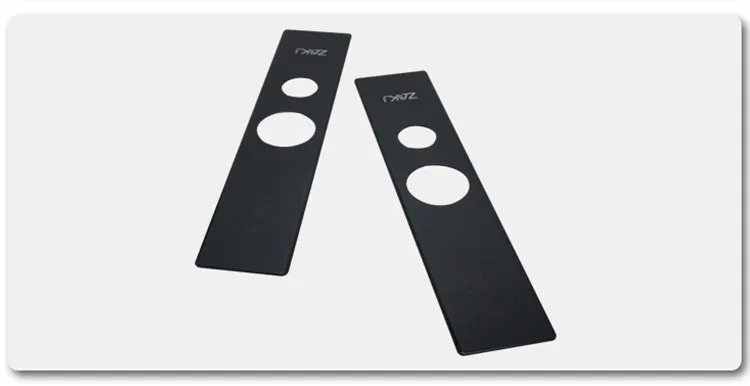
The solution is a small number of times to add ink. If the graphic area is small, the ink consumption on the screen printing plate is small, which is easy to cause pasting. The solution is to add ink in small quantities and many times.
Poor fluidity of the ink can cause the ink to paste the plate without passing through the screen. This problem can be resolved by improving the fluidity of the ink by reducing the viscosity of the ink without affecting the quality of the print. After the occurrence of paste, based on the nature of the ink on the plate, it can be solved by using the appropriate solvent scrubbing.
The essentials of scrubbing is to start from the printing surface and from the center to the periphery with a gentle scrub. After wiping, the printing plate should be checked. If there are defects, they should be repaired in time, and then the printing process can be restarted after repair. It is noted that the plate film will become thinner after every scrubbing. If there are major defects in the plate film caused by scrubbing, it is necessary to replace them with new plate.
Poor Ink Adhesion
When printing on glass, it is important that the glass should be strictly degreased and pre-treatment checks before printing. When the glass surface adheres to grease, adhesives, dust and other substances, it will cause poor bonding of ink and glass.
If the poor ink film adhesion is caused by insufficient adhesion of the ink itself, it is preferable to replace the other types of ink for printing. Improper choice of dilution solvent will also cause the phenomenon of ink film adhesion. Therefore, when choosing a dilution solvent, it is necessary to consider the nature of the ink so as to avoid the phenomenon of poor adhesion of ink and substrate.
Uneven Inking
There are various reasons for uneven ink film thickness. As far as the ink is concerned, the ink is poorly blended, or the normal blending of ink is mixed with the ink skin. When printing, due to the role of the solvent expansion, softening, the ink should be permeable to the mesh blocking, acting as the role of the plate film, so that the ink cannot pass.
In order to prevent this problem, after the deployment of the ink (especially the old ink), it should be filtered once with the net before use. When reusing a plate that has already been used, the old ink attached to the plate frame must be completely removed.
When storing the plates after printing, the plate (and also the squeegee) should be washed thoroughly. If the tip of the front end of the ink return plate is damaged, a streak will appear along the direction of movement of the squeegee. When printing glass, uneven inking will be apparent. Therefore, the front end of the squeegee must be well protected from damage. If it is damaged, it must be carefully ground with a grinder.
In addition, the printing table of the concave and convex will also affect the inking uniformity. Convex ink layer is thin, concave ink layer is thick. This phenomenon is also known as uneven inking. And, if dust adheres to the back of the substrate or the printing table, it will also cause the above problems.
Pinhole Problems
Pinhole problems are a major headache for those engaged in glass screen printing. The reasons for the occurrence of pinholes are also varied, many of which are currently unexplained, and some of which are quality management issues. Pinhole is one of the most important inspection items in the inspection of printed cover glass products. Below is the main two inspection point.
- Dust and Foreign Impurities Attached to the Plate.
When making the plate, the water washing and developing will have some solvents mixed in. In the emulsion coating, there is also dust mixed in. These impurities attached to the screen will produce pinholes. These problems can be found and repaired timely if attention is paid to the inspection during the test. Pinholes can also be caused by dust and foreign matter adhering to the stencil and blocking the stencil openings. Before formal printing, the screen should be carefully inspected to eliminate the dirt on the plate.
Glass panels should be printed immediately after pre-treatment before printing to make its surface clean. If cover glass is not printed immediately after pre-treatment, it will be polluted again. After pre-treatment, dirt such as oil, dust, and more can be removed. Besides, it can also remove the dust attached to the surface. Special attention should be paid to fingerprints caused by bring cover glass by hands. Fingerprints of the hand will also be attached to the printing surface, and pinholes will be formed when printing.
Air Bubbles
The presence of air bubbles within the ink layer can sometimes occur after printing on glass. Several factors contribute to this issue:
- Inadequate Pre-treatment of the Substrate
Dust, oil, or other contaminants on the glass surface can lead to air bubbles becoming trapped during the printing process. Proper cleaning and preparation of the glass surface are crucial to ensure good ink adhesion and prevent air bubble formation.
When adjusting ink viscosity through the addition of solvents or additives and mixing, air bubbles can be introduced into the ink. While low-viscosity inks may naturally release these bubbles over time, high-viscosity inks might require further action. Some bubbles may disappear during printing due to ink transfer, while others may persist or even grow larger.
To eliminate these bubbles, defoamers can be used. The typical amount of defoamer added to the ink is around 0.1% to 1%. Exceeding the recommended amount can have the opposite effect and promote foaming. Even if bubbles form after ink transfer, they will gradually disappear, and the ink will form a smooth film as long as the substrate wettability and ink flow are adequate.
However, if the air bubbles remain, the ink film will have an uneven, ring-shaped surface. Generally, air bubbles in the ink can also be eliminated as they pass through the mesh during printing.
- Excessive or Uneven Printing Speed
Printing too quickly or with inconsistent speed can also cause air bubbles. Maintaining a moderate and consistent printing speed is essential to prevent air entrapment during ink application.
Printing Size Expansion
The main reasons for printing size expansion are the ink viscosity is relatively low and the ink fluidity is too large. The expansion of the size of the screen printing plate during production is also a cause of the expansion of the printing size.
In order to avoid overflow of ink to the surrounding area after printing due to excessive ink fluidity, resulting in larger printing size, it can be considered to increase the viscosity of the ink to reduce the fluidity of the ink. In the production of screen printing plate, it is necessary to strictly ensure the quality of the screen plate and the tension of the screen plate.
Electrostatic problem
Electrostatic current is generally very small, the potential difference is very large, and can appear attraction, repulsion, conductivity, discharge and other phenomena. So electrostatic will bring the adverse effects on screen printing. The scraper rubber pressurized when printing the screen, which makes the rubber part and the screen charged. The screen itself is charged, which will affect the normal inking, resulting in blocking faults, and will be sucked up by the screen in the moment of output of the substrate.
Methods to prevent the generation of static electricity: adjust the ambient temperature, increase air humidity. The appropriate temperature is generally about 20 ℃ and the relative humidity is about 60%. Then, the electrostatic transmission can be made in the wet air, which helps to reduce the mesh spacing and reduce the printing speed.
Ink Leakage on Printing Plate
Ink leakage from a part of the plate film is called ink leakage fault. The causes are: part of the scraper is damaged; the pressure of scraping ink is large; the gap between the plate and the glass is too large; the plate frame is deformed; the local printing pressure is not enough; the ink is not uniform; the screen is too fine; the printing speed is too fast and so on.
If the glass and ink mixed with dust, without any treatment on the printing, scraping pressure will make the plate film damaged, insufficient exposure to produce pinholes and other issues when making the plate, will make the plate film leakage of ink. At this time, the tape can be used from the back of the plate to do emergency treatment. This operation if not very quickly, it will make the plate ink dry, then it had to be wiped with a solvent version of the whole.
Wiping the plate is also a cause of stripping of the plate film and is therefore preferably avoided. Leakage of ink from the plate often occurs in the part of the plate where the ink rests, and it is therefore advisable to strengthen this part of the plate when it is being made.
Ink Mottling
Ink Mottling refers to the glass surface of the graphic part and the darker part of the spot-like marks, this phenomenon affects the printing effect. Glass screen printing is prone to this problem.
This problem is caused by the following reasons: the printing speed and ink drying is too slow; ink layer is too thin; ink thixotropy; the effect of static electricity; ink pigment dispersion is poor, due to the polarity of the pigment particles, the particles coagulate with each other, the appearance of the color mottling marks.
Improvement methods for ink mottling are: improve the fluidity of the ink; the use of fast-drying melt; as far as possible with high viscosity ink printing: increase the thickness of the wet film of the ink, try to use a small amount of oil-absorbing pigments made of ink: try to minimize the impact of static electricity.
Image Deformation
During the printing process, the printing pressure applied to the printing plate by the squeegee only needs to achieve a line contact between the plate and the substrate. Excessive pressure should be avoided.
Printing pressure is too large, the printing plate and the substrate inside the contact, will make the screen stretch, resulting in deformation of the printed image. Screen printing is the smallest printing pressure in a variety of printing methods. If the pressure cannot be printed without increasing the pressure, the gap between the plate and the glass surface should be narrowed so that the pressure of the squeegee can be reduced.
Conclusion
At present, the glass silkscreen technology is changing to a high-tech, high-tech value-added processing areas. At present, the touch screen, liquid crystal substrate, solar photovoltaic substrate and other display cover glass products have gradually become an integral part of the field of electronic information products nowadays. I believe that with the passage of time, silkscreen technology will provide more support for the glass panel industry.



 EN
 FR
 DE
 ES
 PT
 IT
 NL
 DA
 RU
 AR
 TR
 JA
 KO
 ID
 UK
 TH
 VI
 PL
 MS
 ET
 EL