Introduction
In the world of precision engineering and industrial design, achieving a flawless, watertight seal in electronic enclosures and lighting fixtures is a paramount challenge. Enter tempered step glass, a highly specialized, precision-engineered glass component designed to solve the most demanding environmental sealing problems. Also known as step tempered glass, this unique component features a custom-machined recessed profile along its edge, allowing it to seat perfectly flush inside a housing unit.
Unlike standard flat glass, which relies heavily on chemical adhesives or messy secondary sealants to keep water and dust out, step glass leverages physical geometry. By creating a mechanical locking mechanism that compresses against a silicone gasket, it ensures unparalleled protection for high-performance applications. This makes it the undisputed preferred protective cover glass for LED luminaires, intricate industrial instrument windows, robust equipment panels, and sensitive electronic displays.
In this comprehensive guide, we will explore the technical anatomy of step tempered glass, dissect its rigorous manufacturing processes, compare base material options, and detail exactly how to specify the perfect glass substrate for your next engineering project. Whether you are designing underground LED arrays or high-temperature machinery, understanding the capabilities of step glass is critical to product longevity.
What Is Tempered Step Glass?
The Anatomy of a Stepped Profile
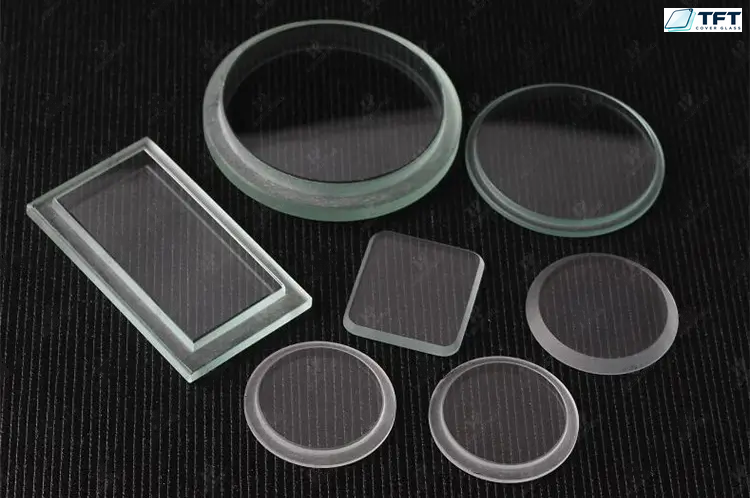
At its core, tempered step glass is defined by its unique edge geometry. The “step” refers to a precision-milled ledge that runs entirely around the perimeter of the glass disc or rectangular panel. Visually, it resembles a shallow top hat or a tiered plateau. This recessed ledge divides the glass into two distinct functional zones: the thicker central core, which provides structural impact resistance and optical clarity, and the thinner stepped perimeter, which serves as the mounting flange.

When this glass is fitted into a customized metal or plastic housing, the stepped ledge rests inside a corresponding machined groove. This geometric alignment ensures that the top surface of the glass sits entirely flush with the exterior of the housing. This flush seating is not merely an aesthetic choice; it prevents the accumulation of water, dust, and debris on the surface, which is a critical failure point in traditional flat-glass installations.
Why Flat Glass Falls Short in Sealing?
To truly understand the value of tempered step glass, one must look at the limitations of standard flat glass. Flat glass sits on top of a housing or is glued into a channel. Over time, thermal expansion, UV degradation, and chemical exposure can cause adhesives to fail, leading to moisture ingress. In environments that demand IP67 or IP68 ratings (such as marine equipment or underground lighting), relying solely on chemical bonds is a high-risk engineering gamble.
Step glass eliminates this vulnerability. By utilizing a physical step, engineers can design systems that lock the glass in place using mechanical pressure, such as a bolted bezel or a snap-fit retaining ring—completely removing the need for liquid adhesives. For manufacturers seeking reliable components, partnering with a specialized custom tempered step lighting glass manufacturer ensures these geometric profiles are executed flawlessly.
The Compression Interface Explained
The true magic of the stepped ledge lies in the “compression interface.” The step is explicitly designed to house a silicone or EPDM O-ring gasket. As the step glass is mechanically secured into the fixture, it evenly compresses the gasket within the housing groove. This uniform compression is the secret to achieving long-lasting, watertight seals for IP-rated outdoor luminaires and underwater lights.
“The transition from flat glued glass to mechanically compressed step glass is often the single most important design change a lighting manufacturer can make to eliminate warranty claims related to water ingress. The physical geometry of the step guarantees even gasket pressure, making IP68 ratings easily attainable.”— Dr. Aris Thorne, Lead Optical Packaging Engineer
To ensure this compression is perfectly uniform, the glass must be manufactured with extreme dimensional accuracy. Industry leaders like TFT Cover Glass manufacture these glass components with CNC precision tolerances as tight as ±0.05mm. If the step is even slightly uneven, it can create micro-gaps in the gasket compression, compromising the waterproof sealing performance.
Key Applications of Tempered Step Glass
Tempered step glass serves critical protective and optical roles across multiple industries. Its step profile ensures a sealed, secure fit that flat glass cannot provide.
| Industry | Specific Application | Why Step Glass Is Used |
| Industrial Lighting | High-bay luminaires, floodlights, street lights | Waterproof IP seal, impact resistance, thermal stability |
| Architectural Lighting | In-ground uplights, underwater lights, pool lights | Step locks glass into housing, prevents water ingress |
| Equipment Windows | Machinery sight glasses, oven doors, furnace peepholes | Withstands high heat, pressure, and chemical exposure |
| Electronics / Displays | Instrument panels, HMI windows, control consoles | Optical clarity, scratch resistance, slim profile fit |
| Medical / Lab Equipment | Device covers, optical windows, indicator panels | Chemical resistance, cleanroom-compatible |
| Outdoor Enclosures | Signal lights, traffic indicators, marine equipment | IP66–IP68 weatherproofing enabled by step geometry |
How Is Tempered Step Glass Made?
Creating step glass that can withstand severe impacts while maintaining microscopic tolerances requires a sophisticated blend of traditional glass craftsmanship and modern computer numerical control (CNC) technology. The manufacturing process combines highly accurate precision grinding with an intense industrial tempering furnace cycle.

Raw Glass Selection and Cutting
The process begins with the selection of the raw glass substrate. Depending on the final application’s thermal and optical requirements, manufacturers will select from high-quality float glass, ultra-clear (low-iron) glass, or specialized borosilicate glass. The raw sheets are first cut down to the approximate required shape, whether that is perfectly round, rectangular, or a highly specific custom shape.
CNC Precision Step Profiling and Edge Polishing
Once the rough shape is cut, the glass enters the most critical phase of production: CNC step profiling. High-speed, diamond-tipped CNC grinding machines carefully mill the stepped ledge into the perimeter of the glass. Because gasket compression relies on exact measurements, this milling process is held to a strict ±0.05mm dimensional tolerance. It requires advanced machinery to ensure the depth and width of the step are entirely uniform across the whole perimeter.
After the CNC profiling is complete, the freshly ground edges are inherently rough and contain microscopic fractures. To resolve this, the edges undergo rigorous mechanical polishing. Polishing removes these micro-fractures, which is a vital step; any remaining micro-cracks could become stress concentrators that cause the glass to shatter during the upcoming tempering phase.
The Tempering and Quenching Process
With the physical geometry perfected, the glass must now be toughened. The profiled glass is fed into an industrial tempering furnace and heated to approximately 620–680°C, bringing it to a near-plastic state. Once the optimal temperature is reached, the glass is rapidly cooled (quenched) using high-pressure air jets.
This rapid cooling causes the outer surfaces of the glass to cool and contract much faster than the inner core. As the core eventually cools and shrinks, it pulls back against the rigid outer layers, creating intense surface compression and internal tensile stress. According to published glass strength data from industry authorities like Pilkington, tempered glass produced by this exact process is predictably 4× stronger than standard annealed glass of the same thickness.
Coating Application and Quality Inspection
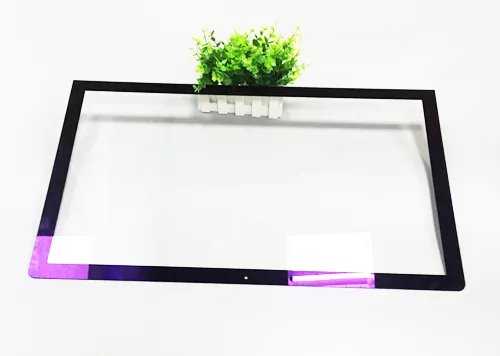
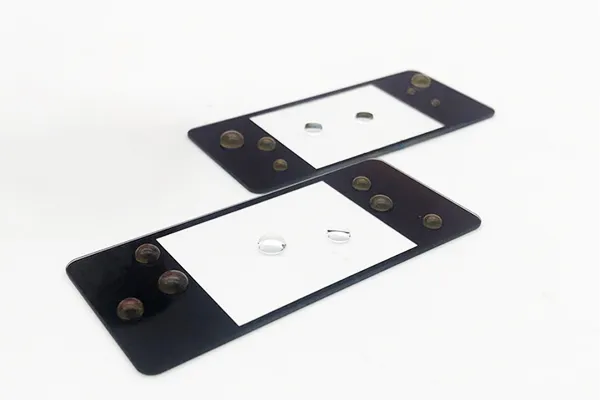
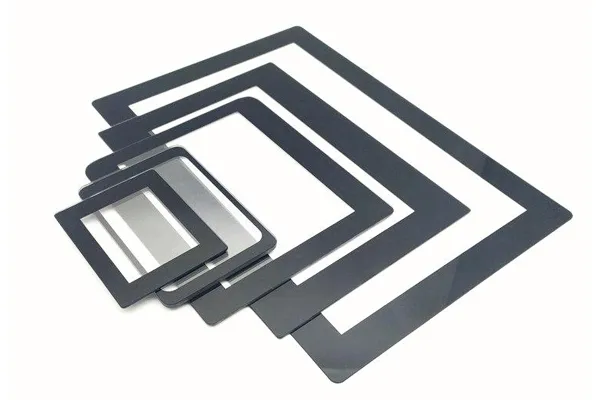
After tempering, optional surface treatments can be applied. Anti-reflective (AR) coatings, ceramic frit printing (for black borders or logos), or hydrophobic (water-repelling) coatings are added to enhance performance. Finally, rigorous quality inspection takes place. Technicians perform dimensional checks with digital calipers, optical clarity assessments, and stress birefringence checks using polarized light to ensure the tempering stress is evenly distributed before the glass is shipped.
Material Options: Which Glass Type Is Right for You?
The physical step profile is only half the equation; selecting the correct underlying glass substrate is equally vital to the success of your project. Three primary glass substrate types are standardly used for step tempered glass, each uniquely suited to different performance environments, thermal constraints, and budget considerations.
Soda Lime vs. Ultra-Clear (Low-Iron) Glass
Soda Lime Glass is the most common and economical option. It offers moderate chemical resistance and can handle continuous operating temperatures up to approximately 150°C. With a light transmittance of roughly 88–91%, it is the go-to material for general-purpose lighting covers, basic commercial fixtures, and low-cost industrial applications where extreme heat is not a factor.

Ultra-Clear (Low-Iron) Glass is a premium upgrade to standard soda lime. By removing the iron content from the raw glass mixture, the characteristic “green tint” seen on the edges of standard glass is eliminated. This boosts the natural light transmittance up to 91–92% without coatings. Ultra-clear glass is highly recommended for high-brightness LED panels, photography equipment, and high-end display windows where color rendering and optical purity are critical.
Borosilicate Glass for High Temperatures
When operating environments involve severe heat or harsh chemicals, standard glass will fail. Borosilicate Glass contains boron trioxide, which gives it a significantly lower thermal expansion coefficient than soda lime glass. This makes it exceptionally resistant to thermal shock.
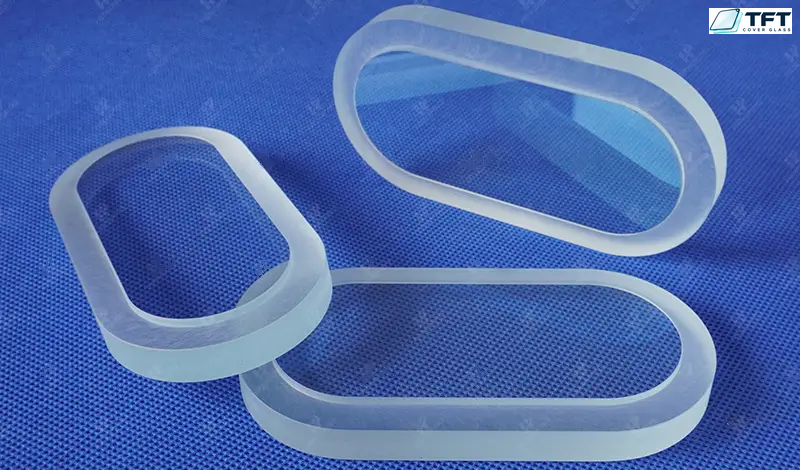
For example, a luminaire cycling between freezing outdoor temperatures in winter and the high operating heat of an internal halogen or high-wattage LED bulb will crack standard glass. Borosilicate can withstand operating temperatures up to ~500°C and is 10× more resistant to chemical degradation. This makes it the ideal substrate for high-heat industrial equipment, oven windows, and custom high-temperature step tempered glass for underground LED lights.
Quartz Glass for Extreme Environments
For the most extreme applications, Quartz Glass (fused silica) is deployed. Capable of surviving temperatures exceeding 1000°C and boasting virtually zero thermal expansion, quartz glass offers very high chemical durability and supreme UV light transmittance (>93%). It is strictly reserved for specialized uses like high-power UV curing lamps, semiconductor manufacturing windows, and extreme-temperature industrial furnace peepholes.
The Ultimate Material Comparison Table
To help engineers and procurement specialists make data-driven decisions, refer to the following specification matrix comparing the primary step glass materials:
| Material Substrate | Thermal Resistance | Chemical Resistance | Light Transmittance | Typical Use Case |
| Soda Lime Glass | Up to ~150°C | Moderate | ~88–91% | General-purpose lighting covers, low-cost commercial applications |
| Ultra-Clear (Low-Iron) | Up to ~150°C | Moderate | Up to 91–92% | High-brightness LED panels, architectural lighting, display windows |
| Borosilicate Glass | Up to ~500°C | High (10× > Soda Lime) | ~90–92% | Oven windows, industrial furnaces, high-temp outdoor luminaires |
| Quartz Glass | 1000°C+ | Very High | >93% (Excellent UV) | UV lamps, extreme-temperature industrial/scientific equipment |
Optical Enhancements: AR Coating & Ultra-Clear Glass
One major performance upgrade available on step tempered glass is anti-reflective (AR) coating, which dramatically increases light output efficiency for LED lighting enclosures. AR glass specifications
Standard soda lime glass reflects approximately 8% of light from its surfaces. With a high-quality AR coating applied to both sides, surface reflection is reduced to as low as ≤1.5% while light transmittance improves from ~88% to as high as 98–99%. AR glass specifications
| Glass Type | Standard Transmittance | With AR Coating | Surface Reflection |
| Standard soda lime | ~88% | ~94–96% | ~8% → ~2–3% AR glass specifications |
| Ultra-clear glass | ~91% | ~96–98% | ~4% → ~1.5% AR glass specifications |
| AR-optimized (premium) | ~91% | Up to 99% | ≤1.0% per side AR glass specifications |
For LED fixture manufacturers, even a 5–8% improvement in transmittance meaningfully impacts lumen output, energy efficiency ratings, and product longevity.
IP Ratings and Weatherproofing Performance
The step profile is the engineering feature that makes IP65–IP68-rated glass covers achievable without adhesives or secondary sealing compounds. The glass step compresses against a silicone gasket seated inside the housing groove, forming a reliable environmental seal. Step lighting configurator
| IP Rating | Protection Level | Typical Application |
| IP54 | Dust-protected, splash-resistant | Indoor commercial fixtures |
| IP65 | Dust-tight, low-pressure water jet | Outdoor wall lights, cabinet windows |
| IP66 | Dust-tight, high-pressure water jets | Industrial floodlights, exterior enclosures RAB floodlight specifications (PDF) |
| IP67 | Dust-tight, immersion up to 1m/30 min | Underground LED inground lights |
| IP68 | Dust-tight, continuous immersion | Outdoor architectural step lights Lumière Rio catalog (PDF) |
The IK impact resistance rating also applies — step tempered glass can achieve IK06 to IK10 (withstanding impacts from 1J to 20J), qualifying it for high-traffic industrial environments. Stepped lighting glass
How to Choose Tempered Step Glass for Your Project

Selecting the right step glass involves matching material, geometry, and coating to your specific application:
- Temperature Environment
Use borosilicate or quartz for applications above 150°C; soda lime or ultra-clear for standard LED operating temperatures - IP Rating Requirement
Confirm the step depth and width match the gasket groove dimensions in your housing for the target IP level Step lighting configurator - Optical Priority
Specify AR-coated ultra-clear glass when maximum lumen transmission is critical (e.g., high-output LED panels, solar sensors) AR glass specifications - Shape and Size
CNC machining accommodates round, rectangular, or custom irregular profiles; specify ±0.05mm tolerance for sealed assemblies Stepped lighting glass - Surface Treatment
Ceramic printing can add logos, frosted borders, or light-diffusion patterns without affecting the step seal Stepped lighting glass
FAQs
What is tempered step glass used for?
Tempered step glass is primarily used as a protective cover glass in industrial and architectural LED lighting (inground lights, high-bay fixtures, floodlights), equipment observation windows (ovens, furnaces, machinery), electronic display panels, and marine/outdoor enclosures. The stepped edge profile allows it to form a waterproof IP-rated seal when seated against a silicone gasket inside a housing.
What is the difference between step glass and regular flat tempered glass?
Regular flat tempered glass has uniform thickness across its entire surface. Step glass has a precision-machined ledge (the “step”) machined around its perimeter, creating a raised rim and a recessed center. This step allows the glass to mechanically lock into a housing groove and compress against a gasket, enabling IP65–IP68 weatherproofing. Flat glass cannot achieve this kind of sealed installation without additional bonding agents.
Can step glass have anti-reflective (AR) coating?
Yes. AR coating is one of the most popular enhancements for step tempered glass used in lighting and display applications. It reduces surface reflection from approximately 8% down to ≤1.5%, and increases light transmittance from ~88% up to as high as 99%, significantly improving luminous efficacy and visual clarity in finished fixtures. AR glass specifications
What IK impact rating can tempered step glass achieve?
Tempered step glass can be produced to meet IK06 through IK10 impact resistance ratings per IEC 62262. IK10 is the highest level, certifying the glass can withstand a 20-joule impact — equivalent to a 5kg mass dropped from 400mm. This makes it suitable for demanding industrial environments, public infrastructure lighting, and transportation applications. Stepped lighting glass
How do I specify a custom step glass for my lighting fixture?
To specify a custom step glass, you’ll need to provide: outer dimensions (diameter or length × width), total glass thickness, step depth and step width (to match your housing groove), material type (soda lime/borosilicate/quartz), any coatings (AR, ceramic print, frosted), shape (round/rectangular/custom), and required IP or IK rating. Manufacturers like TFT Cover Glass accept custom engineering drawings and can match ±0.05mm tolerances for sealed assemblies. Stepped lighting glass


 EN
 FR
 DE
 ES
 PT
 IT
 NL
 DA
 RU
 AR
 TR
 JA
 KO
 ID
 UK
 TH
 VI
 PL
 MS
 ET
 EL