
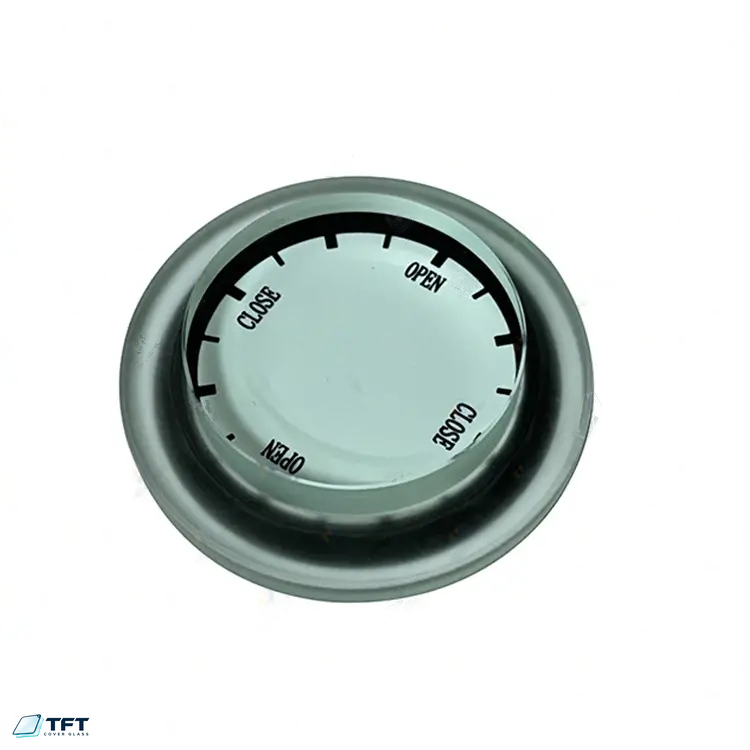
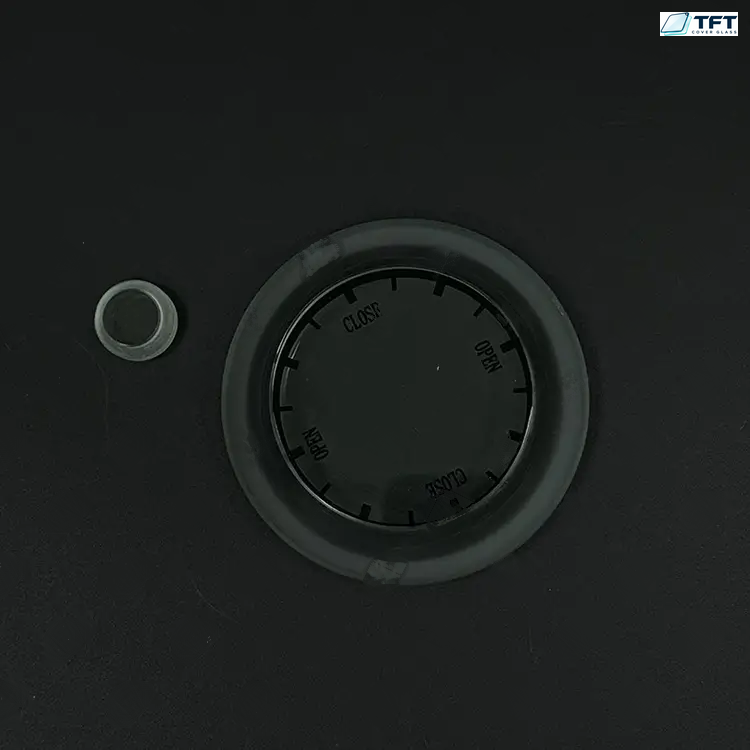
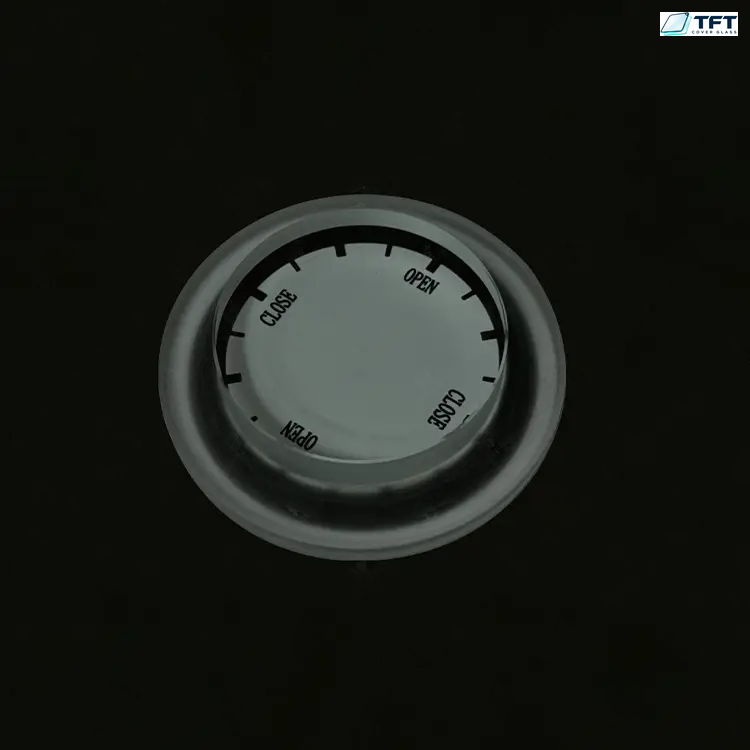
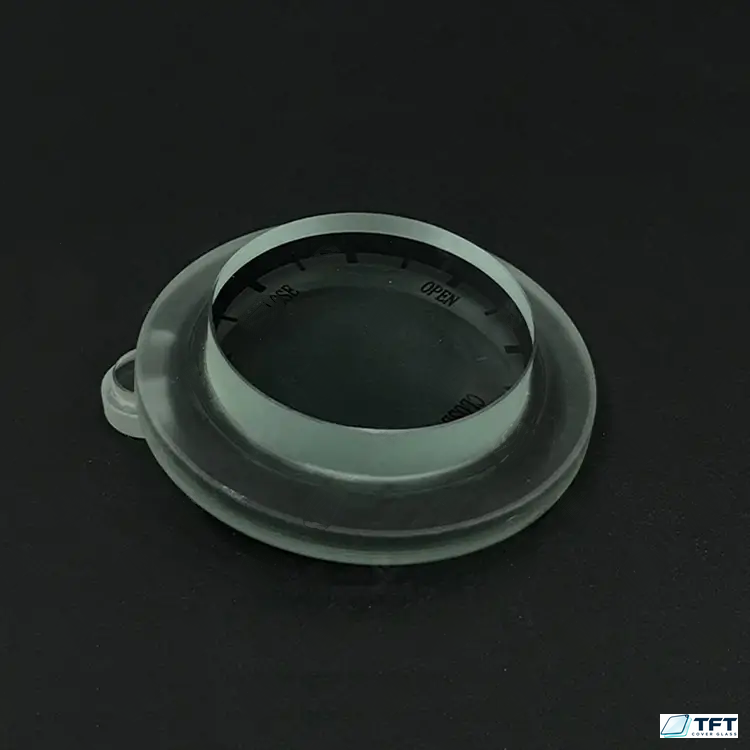
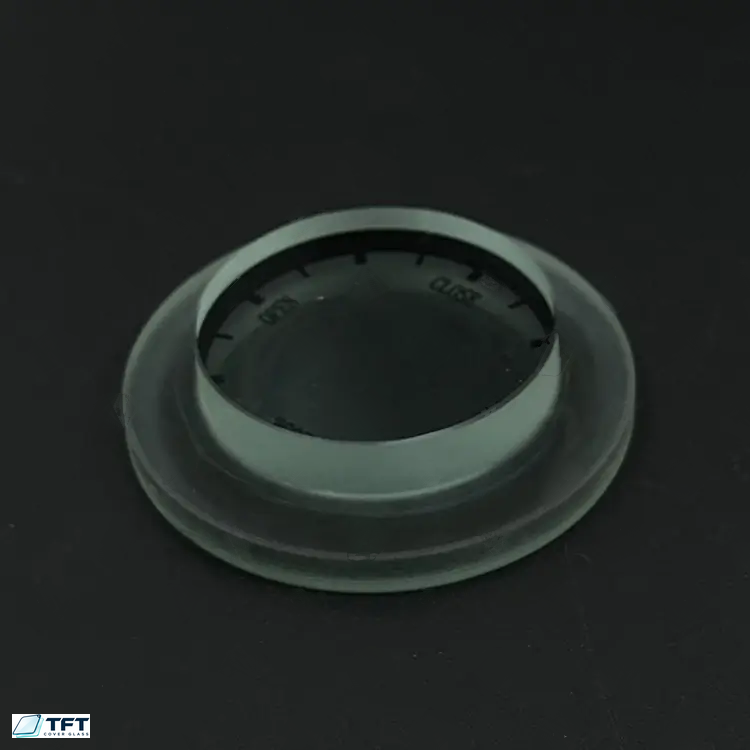
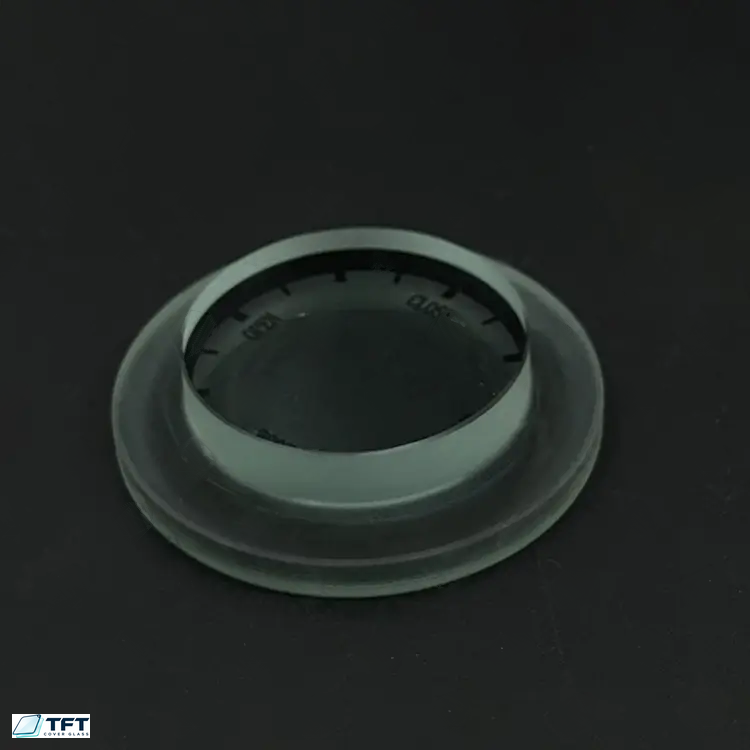
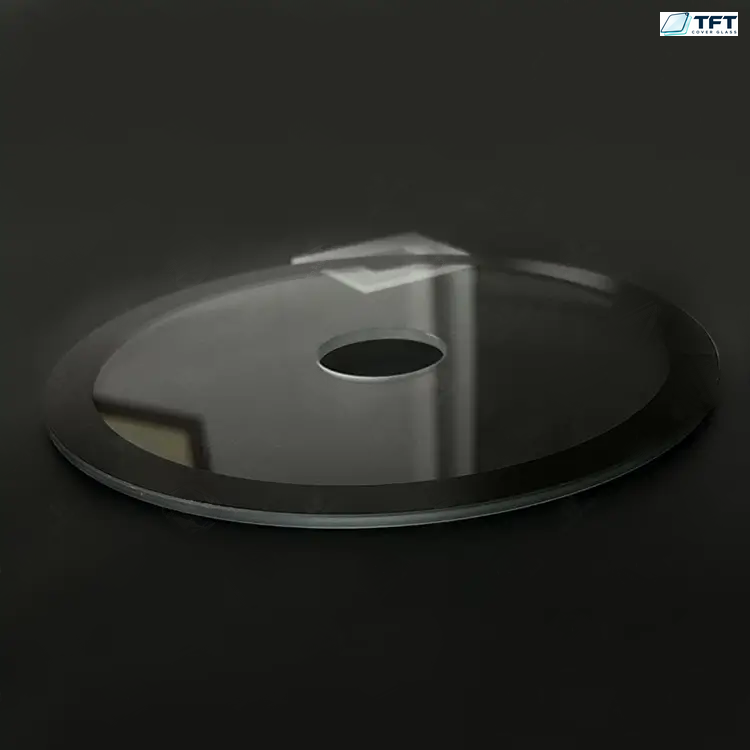
This type of tempered glass cover typically ranges in thickness from 3 to 8 mm and in diameter from φ100 mm to φ150 mm, depending on the specific application. It is commonly paired with LED fixtures to create reliable outdoor lighting systems. (Read more: )
Custom In-Ground Light Step Circular Tempered Glass Features
- Shape and Structure: Circular design for easy embedding into the ground or steps; the “large step” refers to the stepped edge processing on the glass, which facilitates secure fixing in the fixture frame and prevents displacement or water ingress.
- Material: Tempered glass usually using ultra-clear glass to achieve high light transmittance (up to 85% or more). Tempering increases the glass strength by 4-5 times, allowing it to withstand certain pressures (such as pedestrian traffic).
- Surface Treatment: Silkscreen printing technology applies inks to the glass surface to form patterns, commonly used for anti-slip textures, brand logos, or light effect control. Some tempered glass incorporate frosting (frosted) or coating treatments to enhance UV resistance and high-temperature durability.
Manufacturing Process of In-Ground Light Step Circular Tempered Glass
The production process for this type of tempered glass typically includes the following steps:
- Raw Material Preparation: Select float glass or ultra-clear glass sheets, ensuring high purity (90% or more) and a density of about 2.5g/cm³.
- Cutting and Forming: Use CNC cutting machines to shape the glass into a circle and process the “large step” edges (stepped edge) to ensure secure installation.
- Silk Printing: Apply ink or ceramic ink to the glass surface via screen printing to form patterns. After printing, it needs to be dried or UV-cured to ensure strong adhesion and wear resistance.
- Tempering: Heat to 650-700°C and then rapidly cool to create a compressive stress layer on the surface, enhancing impact resistance. Note: Silk printing must be done before tempering, as tempered glass is difficult to process afterward.
- Quality Inspection: Check light transmittance, heat resistance (tolerates temperature differences of 200°C or more), and fracture pattern (tempered glass breaks into small particles without sharp edges).
- Optional Post-Processing: Add anti-explosion films or frosted layers for specific lighting needs.



 EN
 FR
 DE
 ES
 PT
 IT
 NL
 DA
 RU
 AR
 TR
 JA
 KO
 ID
 UK
 TH
 VI
 PL
 MS
 ET
 EL